
At St. Joseph’s, we love to see our students reading far beyond the semester’s final bell.
Students who participated in last year’s summer tutoring program showed incredible growth and retention in their fall test scores, reminding us that the habits students build over the summer have a lasting impact when they return to school in the fall. Summer reading plays a big role in this. Studies tell us that reading strengthens vocabulary, fluency, comprehension, attention, imagination, empathy, and confidence—habits that support not only academic growth, but the formation of the whole child. We’ve also seen these effects firsthand in our Knights.
At its best, summer reading should transcend homework and entertainment to offer children stories they can enter into and carry with them long after they turn the last page. As a Catholic school, we hold reading in special esteem and consider it vital to formation. Quality stories help shape the moral imagination, teaching children to recognize both virtues and vices for what they are.
Long before children can explain virtue abstractly, they can see it lived in a character. The same goes for the weight of sacrifice, the ugliness of cruelty, the warmth of forgiveness, and the beauty of a gift offered in love. A book does not have to be explicitly religious to accomplish this. It only has to see the world honestly as a place charged with meaning, beauty, temptation, suffering, and grace.
We know, though, that it can sometimes feel as if there are more books out there than ever before, while fewer popular titles seem worthy of forming a child’s imagination.
Read on for book suggestions for all Knights—from our littlest preschoolers to our recently graduated 5th graders—that honor and cultivate their moral imagination. A reminder that these are all only recommendations to help you keep the written word alive in the home, not summer reading requirements! Click on the book’s cover to be brought to a page where you can purchase it.
Grades 2K-2: Wonder, Beauty, and Trust
At this age, children need books that awaken wonder.
We are seeking to teach them that that love is shown in small acts and that God is known through creation, family, prayer, and gift. Picture books and gentle read-alouds are especially powerful, as young children receive stories through rhythm, image, repetition, and a quality time spent with caregivers. The books we read at this stage can instill a lifelong love of stories!

The Ink Garden of Brother Theophane
by C.M. Millen
This beautiful picture book introduces children to monks, manuscripts, and the patient work of making something beautiful for God. It weaves together art, prayer, and wonder at God’s Creation, introducing the concept that beauty transcends decoration and is instead a way to make meaning and offer one’s gifts back to the Lord.
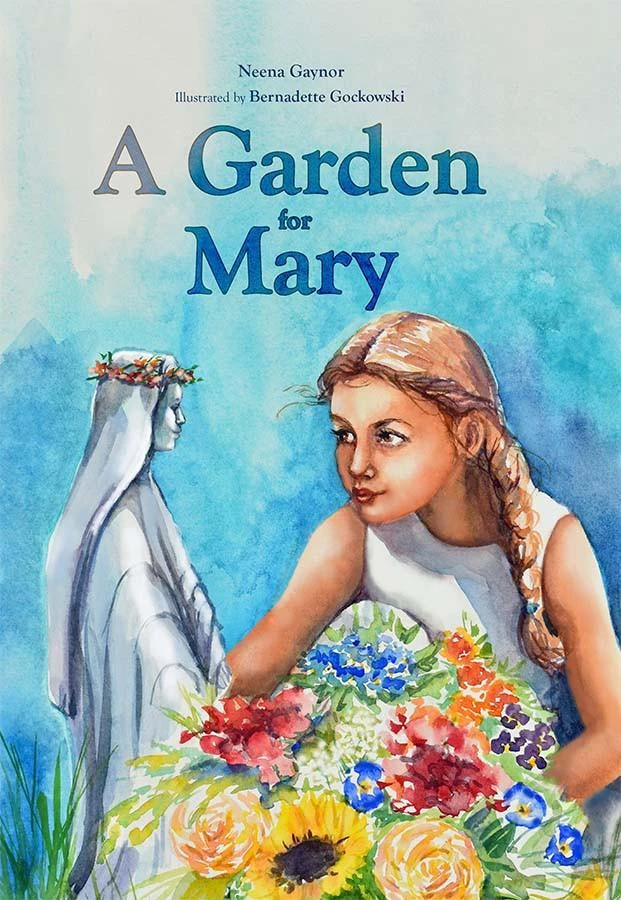
A Garden for Mary
by Neena Gaynor
A Garden for Mary introduces children to the long tradition of planting a garden for Our Lady. Flowers, bees, beauty, and prayer are all depicted in original watercolors, helping young readers see creation as a gift and devotion to Mary as something tender, concrete, and close to home. It is especially fitting for summer, when children are given ample opportunities to notice the world around them and can be inspired by nature to turn their hearts toward God.
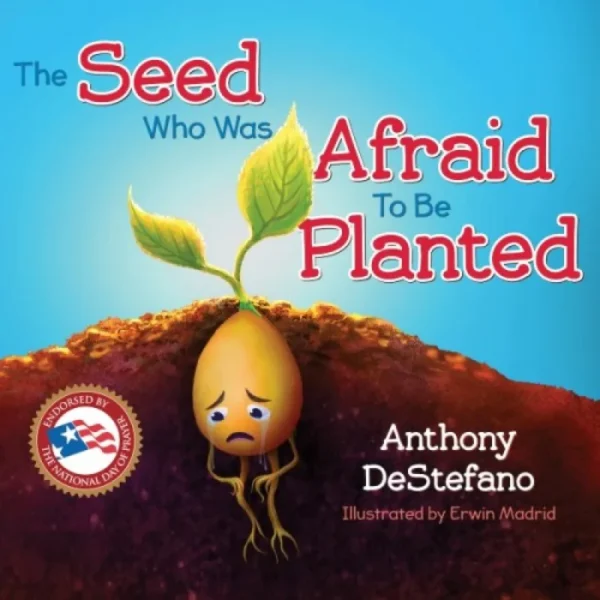
The Seed Who Was Afraid to Be Planted
by Anthony DeStefano
This retelling of Jesus’s Parable of the Sower offers an opportunity for families to talk about trust, surrender, big life changes, and God’s ability to bring beauty from situations we don’t yet understand. Set in rhythmic verse, it’s a gentle introduction to the truth that God can work through difficult or uncertain seasons to bring about something good.
Grades 2-3: Virtue, Saints, and Ordinary Holiness
Some children at this age may be beginning to read more independently, but they still need stories with memorable, clear moral themes. A wonderful way for this age to encounter virtues and struggles playing out in everyday situations is through the lives of the saints.
Chime Travelers
by Lisa M. Hendey
The Chime Travelers series is a strong fit for Grades 2–5, but it’s especially appropriate for those ready for early chapter books. The stories follow children who travel through time and meet saints and experience the grace of the sacraments. Each book includes prayers and discussion questions to help children digest and retain the stories.

A Boy Who Became Pope: The Story of Saint John Paul II
by Fabiola Garza
An accessible biography that introduces children to the early life of St. John Paul II, A Boy Who Became Pope helps students see that saints are formed through family, friendship, hardship, prayer, and courage. For Catholic students, it offers a beautiful reminder that holiness begins in ordinary life and that God can prepare a child’s heart for a great mission.
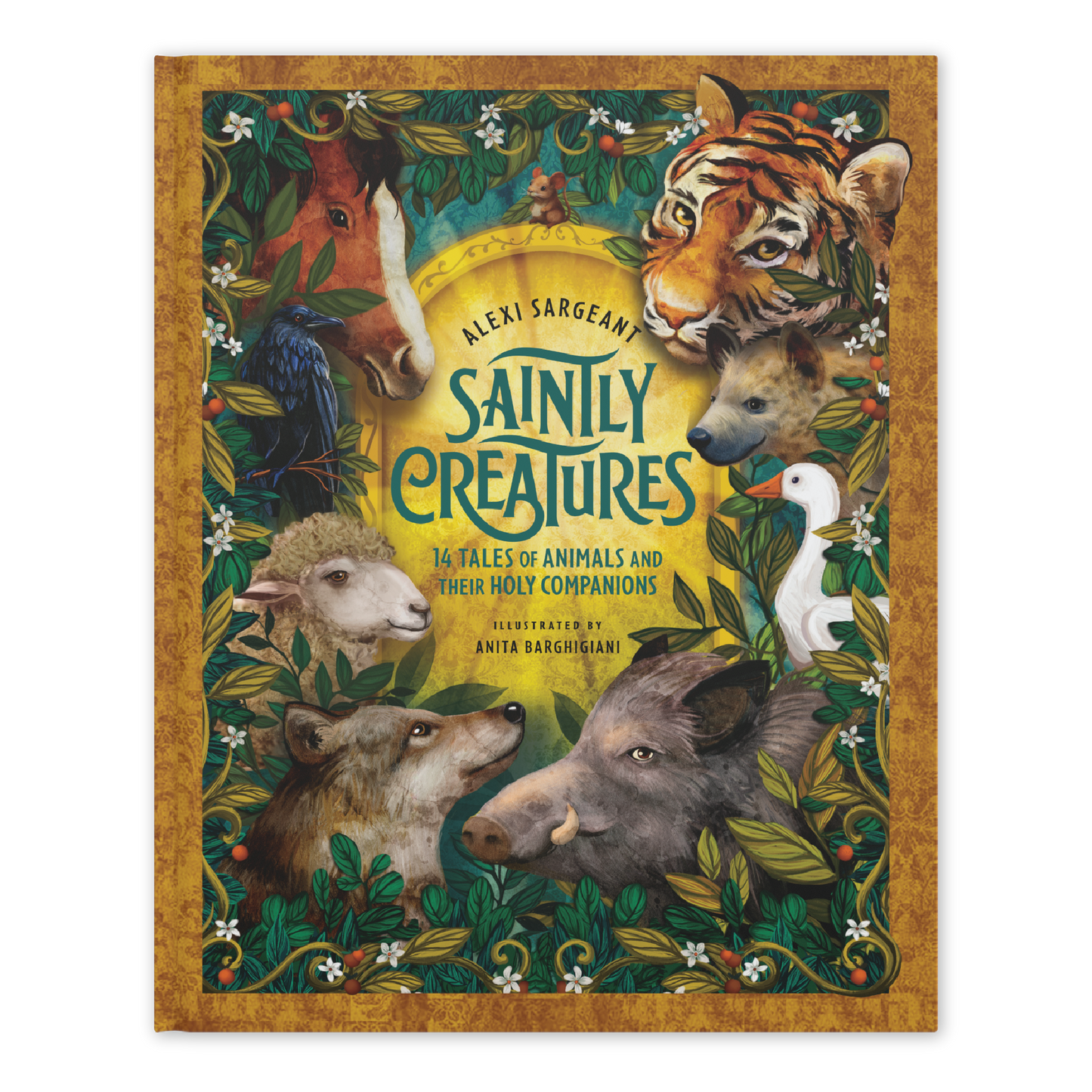
Saintly Creatures
by Alexi Sargeant
This illustrated collection of 14 stories is sure to be a family favorite, especially if you have an animal lover in your life—it introduces children to saints through the animals connected to their stories. From John Bosco’s loyal dog to wild tigers and wolves, each tale helps young readers see that God’s creation is full of wonder and that holiness touches the whole created world.
Grades 3-4: Courage and Responsibility
Once children reach Grades 3-4 they can often handle stories with greater moral complexity. They are also ready to see that doing the right thing is sometimes difficult. Books for this age should stretch the reader’s empathy and help them imagine courage, honesty, mercy, and responsibility in situations beyond their own immediate experience.

My Family and Other Skaters
by Fiorella De Maria
This quirky novel follows a lively Catholic household of six children. It has competitive figure skating, ordinary challenges, and a pet alpaca, and its Catholic vision comes through naturally in the life of the family and their love for one another. For middle-elementary readers, it offers a warm picture of faith lived in modern family life.

The Green Ember
by S.D. Smith
This adventurous fantasy is the start of a series following rabbit siblings caught up in a struggle against evil, calling them to courage, loyalty, sacrifice, and hope. While not explicitly Catholic, the story takes place in a world where family bonds matter and ordinary characters are asked to become brave for the sake of upholding what is right and good.

Past Watchful Dragons
by Rose John Sheffler
In Past Watchful Dragons, Biblical stories are retold through the language of fairy tales, with kings, maidens, warriors, horses, and dragons galore. By encountering Scripture with fresh imagination, children can consider the drama of God’s saving love with new eyes.
Grades 4 & Up: Sacrifice, Suffering, and Moral Strength
Older elementary students, especially those on their way to middle school, are ready for books that ask more of them. They can begin to understand both the world and narratives in different ways. At this age, stories can demonstrate fundamental truths about steadfast loyalty, resisting evil, and remaining open to grace.

The Beatryce Prophecy
by Kate DiCamillo
This tale by Kate DiCamillo (The Tale of Despereaux; Because of Winn-Dixie) has the quality of a medieval legend or fairy story, with themes of courage, mercy, truth, and the power of words. It is a strong choice for students ready for a story that feels both modern and timeless and treats morality seriously.

Tales from Wakken Wood
by E.P. Cowley
This imaginative fantasy draws readers into an enchanted world shaped by courage, prudence, faith, hope, temptation, and the battle between good and evil. Its Narnia-esque atmosphere makes it a fitting choice for older elementary students who are ready for a longer and more challenging story with a vision of moral discernment, wonder, and bravery.

Mrs. Frisby and the Rats of NIMH
by Robert C. O’Brien
This classic adventure follows a widowed mouse who must find a way to save her sick child before their home is destroyed. Morally rich, Mrs. Frisby’s tale explores courage, sacrifice, and the responsibility to use one’s gifts well. For Catholic students, it offers a meaningful way to discuss maternal love, self-giving, community, and the difference between mere survival and virtuous living.
Through books like these, students are invited to enter worlds where virtue is tested, grace is real, and love is always more than a feeling.